Showing posts with label Children. Show all posts

Saturday, February 21, 2015

Cautionary Tales

I was talking with a friend about fairy tales lately. Among many other purposes, fairy tales once provided children with memorable warnings. The stories cautioned young listeners about certain aspects of humanity and about the necessity for humility and courtesy to strangers. When I wondered aloud whether a modern equivalent exists (do we tell cautionary tales to our children today, or just inspirational tales?) my friend pointed out that the modern world is full of cautionary tales. However, they are all for the parents.

Nowadays, it is generally the parents who are supposed to worry about strangers, dangers, and rustling noises in the woods. Not children. Children mustn't be exposed to darkness in their stories, lest they be alarmed. Not, at least, until they are old enough for the YA section.

I wonder why we do this. Being me, of course I think that all the adult cautionary tales and safety obsession is connected to other ideas, which are connected to other ideas, which show us what some of the problems in the modern world are. I'm working on an article about that.


Wednesday, November 5, 2014

My Favorite Picture Books


Recently, while listening to the Read-Aloud Revival podcasts, I found myself wondering how I would answer the question, "If you were stranded on a desert island with your family, what three fictional books would you want to have with you?"

I asked my husband about this. We had trouble deciding. The problem is that the definition of "three books" is a little squishy. For instance, does the Globe Illustrated Complete Works of Shakespeare (a massive volume, to be sure, that would probably sprain your wrists if you tried to read it) count as just one book? The Chronicles of Narnia can also be purchased in a single volume. Does that count as only one? In which case, I'm sure that there are anthologies of British novels that would include multiple books.... Or perhaps I could get some of my favorite books bound into three large volumes. Maybe the problem is with us. Maybe we have the minds of people who cheat when they answer hypothetical literary questions.

A little later, someone asked me to come up with a list of three books that I would recommend for each of his two young daughters.

These mental exercises have resulted in my wanting to provide you all with a list of my favorite childhood picture books. These are the volumes that I would like to have to read to my children if we had no other picture books available, whether or not a desert island was our home. I did not manage to limit the list to a mere three, but it is still fairly short.

Tuesday, September 30, 2014

"I Will Pity Mrs. Jones for the Hugeness of Her Task"


What is this thing that stay-at-home mothers do, confined as they are with a household of small people who sport "delightful bulbous heads, three times too big for the body, which mark these human mushrooms," as G. K. Chesterton affectionately said?

Mothers are painters who work with some of the broadest brushes in the world, because their canvas is hugely enormous and profound.

“Babies need not to be taught a trade, but to be introduced to a world. To put the matter shortly, woman is generally shut up in a house with a human being at the time when he asks all the questions that there are, and some that there aren't. It would be odd if she retained any of the narrowness of a specialist. Now if anyone says that this duty of general enlightenment (even when freed from modern rules and hours, and exercised more spontaneously by a more protected person) is in itself too exacting and oppressive, I can understand the view. I can only answer that our race has thought it worth while to cast this burden on women in order to keep common-sense in the world. But when people begin to talk about this domestic duty as not merely difficult but trivial and dreary, I simply give up the question. For I cannot with the utmost energy of imagination conceive what they mean. When domesticity, for instance, is called drudgery, all the difficulty arises from a double meaning in the word. If drudgery only means dreadfully hard work, I admit the woman drudges in the home, as a man might drudge at the Cathedral of Amiens or drudge behind a gun at Trafalgar. But if it means that the hard work is more heavy because it is trifling, colorless and of small import to the soul, then as I say, I give it up; I do not know what the words mean. To be Queen Elizabeth within a definite area, deciding sales, banquets, labors and holidays; to be Whiteley within a certain area, providing toys, boots, sheets, cakes. and books, to be Aristotle within a certain area, teaching morals, manners, theology, and hygiene; I can understand how this might exhaust the mind, but I cannot imagine how it could narrow it. How can it be a large career to tell other people's children about the Rule of Three, and a small career to tell one's own children about the universe? How can it be broad to be the same thing to everyone, and narrow to be everything to someone? No; a woman's function is laborious, but because it is gigantic, not because it is minute. I will pity Mrs. Jones for the hugeness of her task; I will never pity her for its smallness.”

G. K. Chesterton, What's Wrong with the World


Friday, September 26, 2014

Board Books as Evidence that the World Wants Classical Education


Have you ever read children’s books to a toddler? If so, you will realize that a large share of these books address a particular topic that is essential (apparently) to the proper socialization and education of toddler’s everywhere. The books explain that, “The horse says, ‘Neigh.’ The dog says, ‘Woof!’” These educational drills allow you to ask small children, “What does the kitty-cat say?” and receive an essentially reliable, uniform response. In fact, this response is so conditioned that a shy child who will not tell you his or her own name in the church playroom will probably tell you what a cow says.

Sometimes I wonder why all the babies of America have been set this curriculum. It is not as if the “standard animal sounds” even align with reality. Different languages spell and pronounce these sounds in different ways. Even older American books often spell the dog’s sound as, “Woah, woah,” or, “Bow, wow.” Thus, our focus on contemporary, Western, American versions of such sounds is clearly subjective and perhaps imperialistic. Worse, the knowledge has no obvious practical application, and it is taught through rote memorization instead of experiential learning and skill-building.

I think that there are three reasons why we provide our children with these little drills. One, the kiddos like it. Something within the soul of my eleven-month-old responds with joy to “The cow says ‘Moo’” (although he pronounces it as ‘Ooo’). It provokes a feeling of wonder. His desire to experiment with sounds and vocalizations, his laughter at anything that looks or sounds funny, and his eagerness to imitate all make the exercise a delight to him. Two, the activity has benefits beyond its direct content. That is, the “irrelevant” sounds help children to practice their vocal cords in ways that will equip them to tackle other, more mature words later. Three, deep down in our modern minds, we really do value common culture. We really do appreciate being able to laugh about the sound of a horse with children from any household and any part of town. The animal sounds bind us together and give us a sense of shared identity.


Surely all of this is analogous to a classical education. Classical education also aims to provide delightful material the speaks to the soul of a child even if he is not yet ready to explain or analyze it. It chooses curriculum that is sometimes removed from utilitarian practicality, yet prepares students for other learning. It binds a culture together.

Yes, I have a new definition (one of many) for Classical education: board books for all ages.

Speaking of which, this book looks pretty cool.


Linking-up to Trivium Tuesdays.

Wednesday, September 17, 2014

Need Every Child (Protagonist) Save the Day? Is that Even Healthy?


 Here are a few synopses of imaginary stories for children. They sound convincingly typical, right?

“Maggie’s friends all have special talents. George is a singer. Lily can make friends with any animal. Gertrude dances in a junior ballet troupe that is slated to amuse the troops on Endor. However, as the mean girls at school like to point out, Maggie doesn’t seem good at anything at all. Will Maggie find her true talent and build her self-esteem?” 
“Little Leggie is the only ant in the colony who likes to look at the stars at night and who decorates his bedroom with vintage astronomy posters. When an asteroid heads toward earth, Little Leggie thinks that he just might know the solution to saving all living species from extinction.” 
“Bobbie’s parents have started to whisper together when they think he is not looking, and he can tell that they are talking about something scary. Will Bobbie be able to discover the danger to his family in time? Will he believe in himself enough to ignore all of his parents’ house rules, and thus to save the world? Will they weep and apologize for not trusting him with news of their imminent foreclosure?”

Contemporary stories are filled with youthful characters who struggle with their identity and their place in the world. Almost inevitably, they discover that they are special, and that believing in their specialness is the way to achieve their dreams (even if their “dreams” might be better characterized as whims or wishful thinking). Sometimes they even save the world along the way. Any deviation from this pattern sticks out like a sore thumb

Are such tales are a good influence or a bad one? On the one hand, they are silly. They feed right into the ridiculous parenting culture that Mollie Hemingway describes here. Worse, they nurture the human tendency toward narcissism by teaching children to focus on themselves and their right to the limelight. Yet on the other hand, tales of triumphant underdogs and third sons come from a long and enduring tradition. It could even be said that Christian writers like Lewis and Tolkien were influential in creating a desire for stories about ordinary characters who find themselves in epic plots. Indeed, the idea that even the lowliest individual is valuable, special, and beloved by God comes straight from Christianity, and is probably an example of lingering (even if distorted) Christian influence on our culture.

Wednesday, May 7, 2014

Participation Trophies and the Value of Human Life


Yesterday I read an opinion piece in the New York Times that was modified from the book, The Myth of the Spoiled Child: Challenging Conventional Wisdom about Children and Parenting. In the adapted excerpt, the author, Alfie Kohn, argues that popular disdain for children’s “participation trophies” (and the like) comes from an unhelpful desire to emphasize competition and to ensure that kids experience repeated failure. He discusses this focus on winning and losing, and claims that it teaches a child to believe that his parent’s love as well as his own value as a human being are conditional. They must be earned through success. In fact, Kohn says:
“A commitment to conditionality lives at the intersection of economics and theology. It’s where lectures about the law of the marketplace meet sermons about what we must do to earn our way into heaven. Here, almost every human interaction, even among family members, is regarded as a kind of transaction.”

He contrasts this conditionality with the strong need of children to receive unconditional love and to develop unconditional self-esteem. Leaving aside his unfortunate understanding of Christian theology (which actually teaches the impossibility of earning one’s way to heaven), it is fascinating that the heart of his argument is about raising children who feel that they are inherently valuable. The same theme is echoed constantly in discussions of body-image. It is one of our cultural values that girls and women ought to be told that they are all beautiful, not because anyone truly thinks that all females are equally gorgeous, but because “You are beautiful” is another way of saying, “You have value.”

Monday, April 28, 2014

Princesses Always Cause a Fuss


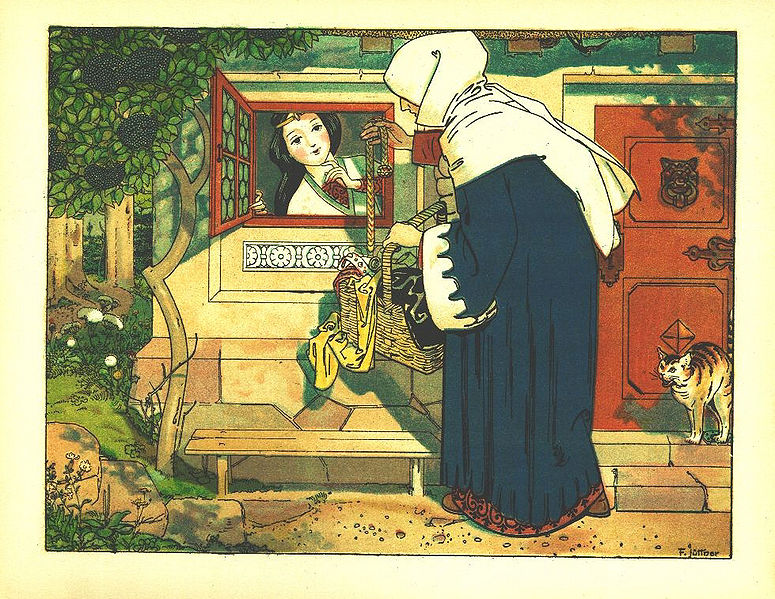
File:Franz Jüttner Schneewittchen 4.jpg

If you don't follow me on facebook, you may not have seen my Friday article in The Federalist.

Here's a quote:
Correlation is not causation, but I wonder if, in a broad sense, the cultural message of pink princesses ultimately makes girls more receptive to stories in which traditional happy endings are impossible. Initially, many small girls really believe the princess story. They live and breathe it, plastic tiaras and all. What is this message that resonates with them? On a basic level, it is of course merely human to be attracted to youth, beauty, success, and happiness, as demonstrated by the friendly smile of the white-toothed heroine and opposed by the scowl of the witch. It is also the nature of a three-year-old to believe that she is not only special but also probably the center of the universe, that she should be served by admiring retainers, that she is the best at everything, and that she should win the prize in every competition. The princess fantasy lures little girls in with shiny rhinestones and simultaneously tells them everything that they already believe. In a sense it is developmentally appropriate. However, the job of adults is not merely to mirror children back to themselves. Our job is to help them mature and grow beyond the narcissism of babyhood.

It's interesting that discussion of little girls and princesses always seems to bring out strong feelings and lots of opinions. Another article ran in The Federalist today about how the author has made her peace with Disney princesses

I am beginning to think that part of the disconnect we see in such discussions is centered around a confusion of what princesses represent. To feminists, they are merely oppressed and spineless women who require a man on a white horse. To anti-consumerists, they are merely plastic merchandise that generates a gazillion dollars. To psychologists, they are often an example of how we prime girls for body-image issues. To defenders of traditional femininity, they may be examples of good, old-fashioned romance and chivalry. To parents of small girls, they may be simply something that their children love. 

I don't think that all of these people are talking about the same thing.

I love folk tales and tales of the fey. There are plenty of lovely, true, excellent stories in this genre about princesses. That is one kind of princess story. The movies of Disney are another. I like some of them in some ways (Tangled is hilarious). Yet the merchandise of Disney, in which all the characters lose their individuality and become products instead of characters, is not something that I want in my home. I'm just not going to buy my kid underwear that advertises for some company, ya know? I'm cranky like that. 


Friday, February 14, 2014

What Does It Take to Educate a Child? 5 Points and 7 Recommended Readings


Another way of asking the same question is, “What should an adult be like, and how do you encourage a child to become like that?” I’ve been bookmarking articles and posts that address one sliver or another of that massive question.

Educating a child takes:


1. A love of one’s subject that manifests as zeal, or toughness, when teaching it to others.

In, “Why Tough Teachers Get Good Results,” Joanne Lipman recalls her high school orchestra teacher and points out that modern research supports his old-fashioned teaching methods.

I had a teacher once who called his students "idiots" when they screwed up. He was our orchestra conductor, a fierce Ukrainian immigrant named Jerry Kupchynsky, and when someone played out of tune, he would stop the entire group to yell, "Who eez deaf in first violins!?" He made us rehearse until our fingers almost bled. He corrected our wayward hands and arms by poking at us with a pencil.
 What did Mr. K do right? What can we learn from a teacher whose methods fly in the face of everything we think we know about education today, but who was undeniably effective?
 MORE


2. The ability to inspire imagination.

In, “It Takes a Pirate to Raise a Child” Daniel B. Coupland makes it clear that character isn’t learned from lesson plans and check marks.

These tales of fantasy and adventure are an inheritance that provides concrete images of goodness and evil — often in vivid blacks and whites — to the still receptive minds of the young. Over time, these images become patterns, and the patterns become habits, and the habits become our way of looking at reality. Children need these sharp distinctions to navigate in a morally confusing world.
 MORE 

Wednesday, November 13, 2013

How to Homeschool without Warping Your Kids: Adult Grads Report Back (III of III)

This article is part of a three-part series. Please read:


Part III: “If You Give a Homeschooler a Fish:” Turning Sheltered Children into Discerning Adults

“As no man is born an artist, so no man is born an angler.” Izaak Walton in The Compleat Angler, or the Contemplative Man's Recreation (1653)

Education, in the fullest sense of the word, is all-encompassing. It includes learning how to interpret life. As homeschool parents educate their families, they have tremendous influence over the way that their children will relate to the rest of humanity. Often homeschool parents have chosen to bypass the public school system because they wish to transmit a very specific understanding of God, the world, and the human role on earth. In this series we have discussed the challenge of teaching our children to apply truth without becoming self-righteous twerps who think that they are better than everyone else simply because they happen to be right. Basically, we want our children to practice discernment without being snooty about it. Yet because we are all sinners, we cross the line between discernment and judgmentalism more easily than we wish. We all sometimes fail to love our neighbor and to recognize the sin in our own heart as well as the sin in his. As we live in daily repentance and forgiveness, we can only trust in God’s grace to carry us through this parenting challenge and to work through us despite our errors.

We know that we must somehow transition from sheltering our little ones to releasing our prepared, discerning grown-ones. Newborn babies can see the contrast between black and white, but their eyesight is too undeveloped to distinguish between shades of blue and green. The moral sense of children is rather like the visual sense of an infant: to children, the world is black and white. Things and people are either good or bad. The concept of being simultaneously a saint (saved by God’s grace), and yet a sinner, is difficult for them to grasp. So is the idea of showing compassionate love to someone “bad.” That is why we must model and teach this attitude. We are preparing our kids to live in the world as adults with adult vision—which means that we begin the process of releasing control while they are still tiny. It’s like the old adage about teaching a man to fish. If you shelter your children now, you protect them for a day. If you teach them to discern for themselves, you protect them for much longer.


Tuesday, November 5, 2013

How to Homeschool without Warping Your Kids: Adult Grads Report Back (II of III)

This article is part of a three-part series. Please read a Summary of the Project. 
Part I, “Are Homeschoolers Raising Judgmental Twerps?” looks at the issue of judgmentalism and argues that it is a real problem of which Christians parents should be aware and wary.
Part II, below, looks at specific pitfalls of parenting that seem to lead to fearful judmentalism and moralism. I realize that some parents err on the opposite side by failing to take the temptations of the world seriously or to focus on guiding their children in truth. This blog post is not addressed to them. Again, as I said in the summary of the project, I am writing from the assumption that homeschooling is a fantastic parenting option even though it is imperfect (nothing on earth is perfect). 
Part III, which will appear next Tuesday, looks at the positive side of how parents have raised kind, secure, pleasant children who love truth.  


Part II: “It’s a Scary World out There:” Three Parenting Pitfalls


Old-fashioned fairytales remind us that if we leave the path in the woods, we will probably meet someone who wants to eat us. The forest is teeming with well-spoken wolves and witches whose houses are made from baked goods. Yet fairytales are also populated by intrepid youngest sons, dispossessed princes, and faithful maidens who must venture out to seek their fortune in the wilderness, and who ultimately triumph over the wolves and witches in their path. This age-old ambiguity about the dangers of the wider world is also expressed in plenty of contemporary family stories: The Croods must venture out of their cave to survive, Merlin must stop over-protecting his son Nemo, and Rapunzel must exit her tower (frying pan in hand) despite the witch’s warnings that, “it’s a scary world out there” full of “men with pointy teeth.”

All parents face tension between the urge to keep their family safe, and the realization that ultimately they must give up control.  Christian homeschool parents are especially concerned because they fear spiritual wolves as well as physical and emotional ones. They look at the disintegration of modern society and start planning a tower for the whole family. Yet tower life is not a suitable long-term plan. God did not tell us to seek safety above all things. The parable of the talents in Matthew 25 describes a servant who is so afraid of losing his master’s money that he buries it in the ground in order to keep it safe, and yet is punished—he should instead have invested it. The Scriptures tell us to train our children, not to bury them. Of course, this training benefits from appropriate sheltering. Homeschoolers are only sensible to skip premature immersion in our society’s postmodern, R-rated culture until their children are grounded in the faith and have acquired a strong sense of what is healthy. Yet children grow up. One of the biggest challenges faced by the first-generation homeschool movement in which I grew up is that the parents (many of them adult converts to Christianity), had few models of how to transition from sheltering their children to letting them go; letting them take risks; letting them arm themselves with frying pans and set out to save the world or respond to the Great Commission. This led to several pitfalls that tend to produce fearful, overly-judgmental children. Three pitfalls in particular were discussed by the adult homeschool grads I spoke to. 

Tuesday, October 29, 2013

How to Homeschool without Warping Your Kids: Adult Grads Report Back (I of III)

In this series, I discuss a concern that I've lately heard expressed by veteran homeschoolers and homeschool graduates. Part I examines the issue of fearful and prideful judgmentalism, and argues that it is a problem of which Christians (especially Christian homeschoolers) should be both aware and wary. Part II looks at parenting choices that can exacerbate or cause this problem and discusses reasons why parents fall into those traps. Part III looks at what parents have done to raise pleasant, successful children who are able to speak the truth in love and to remain faithful to their values without fearing or mocking others. My research included contacting a range of homeschool graduates in their twenties and thirties. They gave me fantastic advice and insights that I am eager to share. Note: I am writing from the assumption that homeschoolers have already proven themselves both academically and socially, and that home education is a wonderful parenting option.

***

Part I: Are Homeschoolers Raising Judgmental Twerps?


A lot of people think that Christians are stuck-up, arrogant, judgmental, sour, and hypocritical; quick to condemn others in order to feel better about ourselves. They think that we go around burning books and spitting in the face of the poor, or that we seek nothing more than to control the universe with our own tyrannous rules. Why do we have such a bad reputation? Recently I listened to a discussion that focused on three main reasons for this. One: sometimes the sinful world is simply reacting in defensive anger to a good and holy law that would restrict their preferred activities (rather like a child who screams, “I hate you!” when his mother forces him to go to bed on time). Two: sometimes the world does not understand the difference between judgment and judgmentalism. Christians may simply explain the contents of our beliefs, and our listeners may assume that we are doing so in order to condemn them. Three: sometimes Christians totally deserve that reputation. Unfortunately, we too are sinners, and our own pride and lack of love can make us obnoxious.

I remember talking with a young Jewish man who had a visceral, emotional reaction against the word “Christian” because the Christian clique in his high school had seized every opportunity to express contempt for non-Christians. Apparently one of them once walked up to him in the hallway and said, “You’re Jewish, aren’t you? You’re going to hell.” The Christian then strode away. It is a horrible thing when the sins of us Christians get in the way of the Gospel that we all (pagan, Jew, and Christian) need desperately. It is the sort of thing for which millstones are prescribed. Nowadays, the need to focus on speaking the truth in love, and to teach our children to do the same, is heightened because of the fractured culture in which we live.

Friday, October 25, 2013

Don't Believe the Neopagans


Is Halloween too pagan for Christians? I have no opinion about whether or not anyone else's family should celebrate the day (growing up, my family did not) but I do recommend a fascinating look the holiday's origins.

Pastor Abrahamson points out the surprisingly modern sources of "pagan" Halloween elements and challenges us not to believe everything that that Wiccans and Neopagans claim (Halloween doesn't actually have a valid pagan history, much as they would like to believe that it does). He also encourages Christians not to abandon celebrating significant days in the Church Year.

Read his article, "Redeeming Holy Days from Pagan Lies — Hallowe’en: A short history," by Pastor Joseph Abrahamson


Friday, October 11, 2013

How to Train a Discerning Reader: 7 Quick Takes (Volume V)


(Illustrated almost entirely with
pictures of discerning cats)


1.
***

“Teach and Release” (in appropriate stages)

It is easy enough to say, “Just make sure your child is a discerning reader, and then he can pick out his own library books.” 

However, how does one actually take a small, peanut-butter smeared child and turn her into a reader who can safely navigate the whirlpool of ideas in the YA section? How does one teach someone to enjoy and yet also evaluate stories that have been artfully arranged in order to influence her emotions, perceptions, and beliefs?

Reading critically is not an isolated skill that can slapped on like a bicycle helmet. It is part of a reader’s approach to life, books, and truth; and it grows with the reader’s maturity. It requires a teacher who is intentionally preparing students to function independently instead of merely keeping them safe within a homey little bubble.

Here are some factors that I think are important in your child’s relationship with books.


(You can't keep your reader
in a safe box forever)
 

Tuesday, October 1, 2013

How Big Is Your Child’s Bubble? Weighing the Merits of Mainstream Fiction in a Classical Education


Recently, a friend asked me why I think it is O.K. for kids to read Harry Potter. This is the kind of conversation that can go in many directions, but is ultimately less about the specifics of J. K. Rowling’s work and is more about the proper role of literature in a Christian child’s upbringing. For me, it is also a discussion that highlights the philosophy of classical education.


First of all, why should fiction be part of a child’s mental and moral education at all? It would be possible to draw all stories from history and to spend the rest of the day on arithmetic, science, and theology. Theoretically, the child would thus be exposed only to truth instead of to imaginary people and their lives. Yet the physical information provided by science, arithmetic, and even history cannot fully explore psychological and spiritual realities and does not prepare the mind to grasp the intangible aspects of theology. Fiction is better than history at helping readers to explore the baffling, beautiful, and horrifying depths of human nature because fiction is an art form and is therefore free to arrange stories in whatever manner is needed to make truth clear. This arrangement can force the reader to think in new ways. It strengthens our ability to empathize with losses, sufferings, and triumphs that we have never experienced because it helps us imagine how they would affect us. It provides a safe way to examine the consequences of life choices without committing them ourselves. Fiction is needed because we humans were created with emotions and imaginations that arithmetic cannot fully satisfy. 

The classical education presents literature from throughout the scope of human experience in order to explore the great questions of life and to see how humanity's answers (whether true or false) influence our own culture. Simultaneously, these books shape the student’s taste by providing the best possible examples of literary and artistic excellence. In the classical model, then, books are chosen for three reasons: 

Friday, September 27, 2013

Kids, Chocolate, & Recommended Reading: 7 Quick Takes (Volume IV)

Today's Quick Takes are kind of random. Interesting, yes, but lacking entirely in a unifying theme.  


1.
***

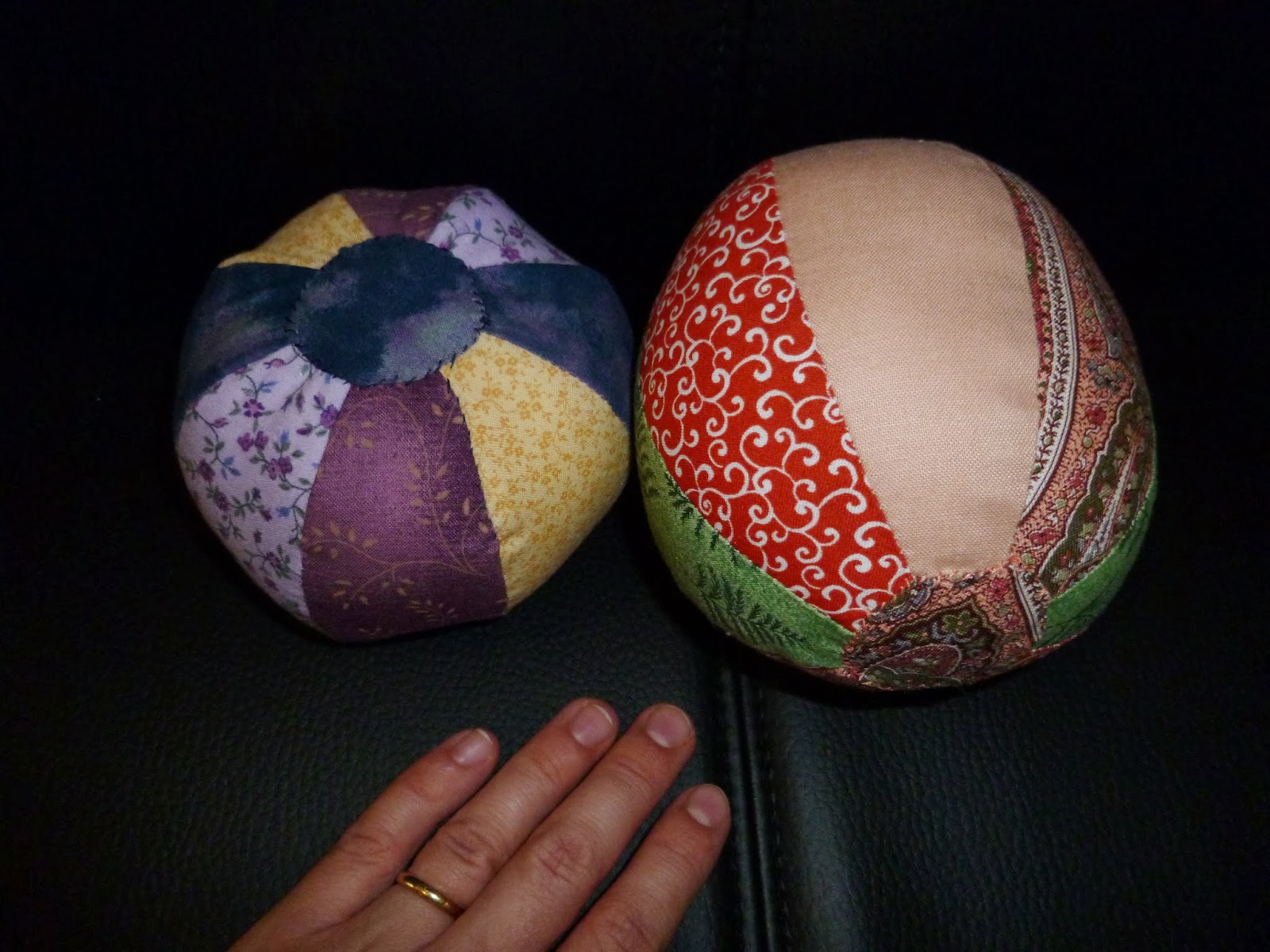
Before getting into the serious stuff, I should show you a picture of the toys I made for baby. You can find the pattern HERE.


(My hand included for scale)


I followed the directions and was surprised to see that my first effort was shaped more like a football than a beach ball. I tried again and cut the pieces into shorter shapes, which resulted in a sort of squished pastry. It’s still cute, though, and baby can throw it without breaking the windows.


2.
***


I mentioned my happy relationship with chocolate in a previous post. However, I have new evidence support it. Read this ARTICLE about the benefits of chocolate as observed by a fantastic Finnish study (the Finns make good chocolate, so they know what they are talking about). 


Focus on the cheerful Finnish part, which says,

“The scientists found that women who regularly ate chocolate while they were pregnant were more likely to say their babies smiled and laughed a lot. They were also more likely to say they were active…. Stressed women who ate chocolate were more likely to say their babies were less fearful in new situations. Stressed women who didn't eat chocolate said their babies were quite fearful in new situations.”

NOT on the gloomy British expert who counters,

"Chocolate is very high in calories and eating too much could lead to unsatisfactory weight gain. I wouldn't advocate supplementing the diet during pregnancy with chocolate."

Bleh. Well, the same to you, Mr. Nigel-Nochocolate.


Friday, September 6, 2013

When the World Turns Grey: Two Juvenile Novels in Contrast

“I think it is possible that by confining your child to blameless stories of child life in which nothing at all alarming ever happens, you would fail to banish the terrors and would succeed in banishing all that can ennoble them or make them endurable. For in the fairy tales, side by side with the terrible figures, we find the immemorial comforters and protectors, the radiant ones. . . It would be nice if no little boy in bed, hearing, or thinking he hears a sound, were ever at all frightened. But if he is going to be frightened, I think it better that he should think of giants and dragons than merely of burglars. And I think St. George, or any bright champion in armour, is a better comfort than the idea of the police.” C.S. Lewis


Last week I read two juvenile novels with superficial similarities. Both could be called fairytales, and both center around parentless children who work for dishonest showmen. They prompted me to think about how juvenile fiction presents good and evil. How should an author communicate the messy reality of life without damaging a child’s sense of right and wrong? How grey can you go?


First, a summary of both books:


The Charlatan’s Boy
Jonathan Rogers, 2010
(Classified as Young Adult, but safe and simple enough for younger readers)

“… when it comes to knowing where you come from, you got to take somebody else’s word for it. That’s where things has always got ticklish for me. I only know one man who might be able to tell me where I come from, and that man is a liar and a fraud.”

Grady is an extremely ugly orphan who knows nothing about his own parents or origins. He travels with the fraudulent Professor Floyd and performs as a “Genuine He-Feechie Alive and in the Flesh,” the main prop of the professor’s lectures on the Feechie folk and their habits. However, as fewer and fewer folk maintain belief in the mythical swamp-dwellers, business dries up. Eventually the professor decides to fabricate a great Feechie scare in order to revive the once-lucrative trade.

Although the story takes place on the imaginary island of Corenwald, it is steeped in the vernacular story-telling tradition of the Old South. Grady’s language and outlook are engagingly atmospheric while remaining down-to-earth. His personality is appealing. Although he suffers from the isolation of someone who belongs nowhere and must deceive almost everyone, he is a kind-hearted soul who attempts to remain honest and who reflects on the nature of truth. He is also loyal to his unloving master because, as he puts it, he has no one else to love. Fairly simple in both plot and character development, the book is full of humor and a touch of melancholy. It would appeal especially to preteen and young teen boys.


Tuesday, September 3, 2013

Why I Will Tell My Children That They’re Ugly

“… we are more and more directing the desires of men to something which does not exist—making the role of the eye in sexuality more and more important and at the same time making its demands more and more impossible.” Screwtape in C. S. Lewis’ The Screwtape Letters

“If everybody had the same face…there’d be no pretty women.” Death Bredon in Dorothy Sayers’ Murder Must Advertise.

"Who's the fairest
of them all?"
"People who use Dove
products!"
As part of their Campaign for Real Beauty, Dove announced that according to their survey of ten to seventeen-year-olds, “only 11% of girls around the world feel comfortable using the word beautiful to describe their looks.” This finding is treated as a psychological problem that ought to be solved. Yet is it any worse than lamenting that only 40% of employees think that their work is above average? Any sillier than fretting that only 5% of students think that they are gifted? If all girls and women are “beautiful,” the word loses all meaning as a description of physical appearance.

Clearly, Dove wishes to disassociate the word “beauty” from physical appearance, and thereby allow the term to convey that all women are valuable beings. This sounds very positive. Yet the insidious flip side is that it ties a woman’s value to the word “beauty.” Our human brains cannot abandon the old meaning even as we embrace the new one. Women cannot help but look around and notice that (with apologies to George Orwell), “All women are beautiful, but some are more beautiful than others.” Doesn’t this imply that the photo-shopped, glistening lady in that ad for Dove body wash is more valuable than a pimpled mortal like me? Doesn’t it suggest that I had better buy some Dove body wash so as to affirm my human value?


What should those girls, 89% of whom fail to describe themselves as beautiful, be told about their looks? Marilyn Monroe said, “All little girls should be told they are pretty, even if they aren't,” but this actually lays a burden on girls. It tells them that they are supposed to be pretty. Eventually they will notice other girls who are prettier than they are. In NurtureShock, Po Bronson and Ashley Merryman report that modern society has gotten it all wrong when it comes to praising children. Studies show that when children are constantly told that they are smart, they actually become less motivated to try anything difficult or new for fear of looking non-smart. In contrast, children who are praised for their hard-work (something that is within their own control) are much more likely to voluntarily tackle challenging tasks. I wonder if these findings apply to how we handle the word beauty.   

Past societies have chosen different approaches to physical appearance. The Puritans warned against vanity and arranged their hair and attire as plainly as possible. Nineteenth and early twentieth-century women may have read magazines for beauty tips, but they were also encouraged to accept their plainness. In Anne of Green Gables, the child Anne asks, “Which would you rather be if you had the choice--divinely beautiful or dazzlingly clever or angelically good?” In her own answer, she comments that she will never be divinely beautiful. Her kind and gentle listener simply nods and listens. No one contradict Jane Eyre when she describes herself as little and plain. Even the inspirational Eleanor Roosevelt did not say that all women are physically lovely merely by virtue of existence. Instead she argued, “No matter how plain a woman may be, if truth and honesty are written across her face, she will be beautiful.”


The plain woman of one hundred years ago was supposed to develop her character. The plain woman of today is supposed to develop belief in her own beauty. Unfortunately, neither solution satisfies any woman. Neither is enough. What is the Christian, Lutheran response to a woman’s desire to feel beautiful? It begins, I think, with shocking words. It tells us that although our desire is “natural,” we are corrupted sinners with corrupted desires. Our wish to receive admiration from others? Vanity. Our hope of attracting men? Lust. Our attempt to build self-worth through good characters or well-groomed bodies? Pride. All this is sin, and it leads to death. It demonstrates the condition of our ugly, rotting hearts. It shows us that we deserve the torment of eternal separation from God. It proves us to be hideous beings with no way to save ourselves. Yet the God whose glory is reflected, ever so faintly, in all earthly beauty is not hideous. Through the ugly, terrible death of Christ, He pays the cost of our ugly sins. He washes away our vanity, lust, and pride in Holy Baptism and gives us new life. In Christ, we are beautiful. The beauty that we are given is full beauty, a beauty that fulfills all the meanings of the word, the kind of beauty that is true and real and could never come in well-advertised bottles. Baptism may not give us earthly, physical beauty, but it gives the kind of beauty that is behind our yearning to be beautiful. It frees us from the need to fulfill the current narrow ideal for physical looks.


As new creatures, we are free from the demands of Eleanor Roosevelt, Dove, and all the well-meaning people who bury us beneath a load of obligation to make ourselves beautiful through our own efforts. As free women, we have Christian liberty to enjoy the physical world that God had given us and enjoy the earthly beauty that He created. Like Rebecca, Abigail, or Esther, we may use jewelry and beauty products. We may exercise and tone our bodies. In Christ, all of this is freedom. On days when it begins to feel again like a burden, we have a solution. We flee to the cross of Christ, confess our sins, and receive absolution. What a beautiful and glorious thing!


P.S. No, I won’t really tell my children that they are ugly. No doubt I’ll think that they are more adorable than anyone else's children. Yet they, too, will be sinners, and I will rejoice that I can bring them to church to experience God’s beautiful gifts of mercy. Because they will need it.


*****

Somewhat Related Reading


 “For women in our culture, to be “hot” or “sexy” is to have value. There are a variety of theories as to why this is true but, from my experience, it goes back to the acceptance of contraception and the idea that the primary purpose of sex is for pleasure.” Read Jen Fulwiler’s take on an unintended effect of contraception on a woman’s self-value.

“It is not surprising that this strange disease of the spirit—the self’s search for the self—should have its counterpart in an anguish of the body. One of the commonplaces of modern experience is dissatisfaction with the body—not as one has allowed it to become, but as it naturally is…. For the appropriate standard for the body—that is, health—has been replaced, not even by another standard, but by very exclusive physical models. The concept of “model” here conforms very closely to the model of the scientists and planners: it is an exclusive, narrowly defined ideal which affects destructively whatever it does not include.” Read quotations from Wendell Berry about the problems that result from the separation of body and soul in “identity.”

Link-ups:


Friday, August 30, 2013

The Over-Zealous Plans of an Inexperienced Mother, or, Notes to My Unborn Baby: 7 Quick Takes (Volume II)


***
1.

"Stop kicking.
Mommy's on the
phone."
In about two months, our baby is expected to join us out here where it is much harder to kick mommy’s bladder. It gives me a strange feeling to think about holding baby. The thought is a good one, full of wonder, yet it carries the kind of awe that is tinged with fear. A baby. We have a baby, and before long we will hold and feed and raise it.   

I hope we do a good job. We have lots of excellent ideas about child-raising, but what if we forget them in the heat of the moment? I am going to record some of them here. That way, if anyone sees me doing something awful as a mother, you can send me a message with a link to this post. Or maybe you will have written a much better post of your own and can send that.


***
2.

Dear Baby,

I want to remember to talk to you a lot. I don’t do it yet because I can’t make eye-contact with you.

Looking at the babies and little children around me, I’ve noticed that babies seem much more engaged with the world if their mothers are always pointing it out. They seem to learn English faster if people say things like, “Look, there’s the red car! Do you see the red car? It’s a red car!” A baby who knows English has alternatives to screaming.

I’ve also noticed that babies seem calmer and more relaxed if their mothers’ narration conveys a cheerful attitude toward life. “Uh oh! That’s OK,” I’ll say. “We just need to pick it up! Help Mommy pick up her toast.”  You will probably always understand a little more than I think you do.

On the other hand, I’ll try not to be too obnoxious about it. Sometimes I’ll shut up and let you talk or just observe the world. I’ll try not to be like that lady at the book sale who chattered to her baby the entire time she was browsing—and told baby all about the ideological flaws in all the books. “Oh, this doesn’t look like a nice book! This book is about war, and we don’t like war. War is terrible. You wouldn’t like this book.”

I might tell you too much about Jane Austen, though.


***
3.


I want to remember that you are capable of more than I think. As you grow, I want to consciously teach you how to behave well, be happy, and show respect for things and people instead of just waiting until you can speak and reason. It’s going to be a lot harder if I wait. Being a baby may make it natural for you to pull my hair, but that doesn’t mean that I can’t actively teach you not to.

You can learn respect by learning to obey “No, don’t touch,” and, “Gentle with the kitty.” That means I won’t completely child-proof my house. You can play with most of the stuff within your reach, but there will be a few things around to teach you respect. Those things will NOT be my china tea cups or anything so valuable that I’m not prepared to sacrifice it to the good of child-training.

I’ve seen parents who say, “Give that to Mama, please,” and who are able to gently retrieve an item without their baby fussing. I think this is because the baby is accustomed to obedience and is also treated with so much respect that he doesn’t feel threatened by his parents’ decision to refuse him the pleasure of eating the table ornament. Hopefully this theory stands the test of you.


***
4.


Let's not devolve into this, OK?
(Image from HERE).
I know that my personality leads me to want to please everyone, and I want to make sure I don’t let my personality run away with me while I’m mothering you. I want to try to decide ahead of time what I will allow and what I won’t, so that I can provide firm boundaries without too many rules. When I say, “No,” I want it to mean something definitive. That way we won’t have to exhaust ourselves with needless negotiations and unpleasantness. Because I would probably give in. That wouldn’t work out well for either of us, in the long run.


***
5.


I hope it’s OK if you don’t have Sophie, the teething giraffe. Apparently all the other babies do (I know this from facebook pictures).


(Apparently, everyone wants Sophie.)


***
6.


I’m a little worried about what you will do at night. I read some books that talked about infant sleep, and they all contained cautionary anecdotes that indicate I’m going to ruin your life no matter what I do. Dr. Sears’ anecdote says that if I let you cry it out, you won’t trust me anymore, and because we will grow distant, I’ll start leaving you behind while I go on weekend and then week-long trips. Actually, I don’t think that will happen, because I can’t imagine pumping a week’s worth of breast milk.

The sleep people say that if I don’t let you cry it out so that you sleep through the night, you will develop ADD or ADHD or otherwise be miserable. The Dr. Ezzo stuff goes farther and says that you will turn into an obnoxious brat who will cause your father and me to divorce. Don’t worry, we won’t do that even if you are a brat.

Here’s my theory: I realize that when you cry at night, you are communicating with me. That’s a good thing. It doesn’t mean, however, that I can’t ever answer your communication with “No, dear, go to sleep.” Hopefully I can pick the right developmental stage to do this in.


***
7.


There is one thing that I am not worried about at all. It’s an amazing thing that I can’t possibly mess up. We are going to take you to church to receive the washing of Holy Baptism. Through this Sacrament you will receive life. As the Small Catechism explains,

How can water do such great things?

It is not the water indeed that does them, but the word of God which is in and with the water, and faith, which trusts such word of God in the water. For without the word of God the water is simple water and no baptism. But with the word of God it is a baptism, that is, a gracious water of life and a washing of regeneration in the Holy Ghost, as St. Paul says, Titus, chapter three: By the washing of regeneration and renewing of the Holy Ghost, which He shed on us abundantly through Jesus Christ, our Savior, that, being justified by His grace, we should be made heirs according to the hope of eternal life. This is a faithful saying.


This is why we can dare to be your parents. Even if we do forget our good resolutions and carefully formulated child-raising philosophies (and I guess we will, sometimes), we can turn to God’s grace and forgiveness. We can’t save you, but He can. 

***
Related Posts Plugin for WordPress, Blogger...