Showing posts with label Quick Takes. Show all posts

Friday, November 21, 2014

Dealing with Anne Shirley, And Other Quick Takes


1.
***

First, a digression: Recently I blogged about Jules Verne, Ursula Le Guin, dragons, and giant octopi. I've significantly expanded that into an article about the subtle, hidden, cultural rules of storytelling. You can read it at The Federalist.


2. 
***


L.M. Montgomery's Anne Shirley is so very, very beloved by many readers that I hesitate to confess my ambiguous feelings about her. Each time I return to the novels (which I read several times throughout childhood, and very much enjoyed at the time), I find myself resenting her for being airbrushed and perfect. That might sound like a weird statement, since Anne is presented as a decidedly flawed individual who is always getting into "scrapes." However, every single one of her flaws are of the sort that readers are most willing to forgive. Inclined to daydream? Good, it makes the story better-- besides, our culture admires and encourages dreams, imagination, and originality. Generous to a fault? How sweet. Passionate tempered? Adds drama, and fits our desire for feisty heroines. Anne has flaws, but they are all romantic flaws. That is rather different from having the unattractive, wart-like flaws that tend to beset us real humans.

Thursday, October 23, 2014

In Which I Conquer the Scones, and Other Off-Topic Quick-Takes


My blog description says quite clearly that Don't Forget the Avocados is not a food blog. However, the time has come, the walrus said, to talk of other things. Of ships and seas and sealing wax, and cabbages and... scones.


1. 
***

I generally cook and bake rather well (to misquote Mrs. Elton from the movie Emma, "My friends say that I certainly know how to make a cookie"). However, success in two areas of baking has historically eluded me. My first problem is with scones. They just don't turn out. The recipe will say to add "enough" cream. I add cream. But how much is enough? How much is too little? In the end, my scones have always tasted of baking powder or had an unfortunate texture. This is very sad, particularly when the failure of a scone is accompanied by the loss of the perfectly good chocolate chips or dried cranberries that I put into it.

However, recently I was inspired to try again.

And, hooray and hallelujah, the oven light has shone. My scones now turn out. They are delicious. They are moist, blueberry-y and nice. Here is the lovely recipe. I don't bother with the glaze (I think it would make them too sweet, anyway) and I definitely follow the advice of grating the frozen butter. I also put a bit more cream in than specified in the recipe.

Thursday, October 16, 2014

Silk Stockings, Skinny Jeans, and Other Quick Takes

October 17th is the anniversary of the day that nylon stockings made their appearance in the world. Nylon stockings may no longer reside in the top dresser drawer of ever self-respecting woman in America, but I think you will agree that their historic importance is significant.


1.
***

So, imagine that you live in the Twentieth Century, and fashion has changed:


You will notice that these new fashions demand a bit more of, er, your legs.

Yet this is not yet a resident of convenience store shelves:


You really do not want to display thick, saggy socks of cotton or wool. You are forced to expend all of your pin money on keeping yourself adequately clad in silk stockings. Like the character Tib in the Betsy-Tacy series, when you go swimming, you thriftily hang your precious stockings over the edge of the boat to protect them, while modestly putting them back on when you come out of the water.

Then, one day at the 1939 World Fair, a new invention is displayed.

Wednesday, October 8, 2014

5 Favorites: Recommended Reading (About Reading)


In "Reviewing school books," Emily points out that, "Among journalists, there have been a number of studies showing up to an 80% decrease in copycat suicides when journalists follow certain guidelines." She discusses one family's loss of their high-school-aged son to suicide, and looks at how authors and teachers can responsibly address self-harm in a way that is less likely to lead youth to follow in a suicidal protagonist's footsteps.

We might wonder why youth should read "dark" books at all, but Nathan Wilson says that we owe our kids a "Dark-Tinted, Truth-Filled Reading List."

This review has made me eager to read Rachel Heffington's book as soon as it comes out. It will be very easy to remember the release date ("remember, remember, the fifth of November!").

Italo Calvino provides a delightful discussion about readers' interaction with the Classics.

Here is a beautiful discussion of "fantasy, realism, and telling the truth" for the writers and storytellers out there. I have ordered the book from which these extracts are pulled.


Tuesday, August 12, 2014

Five Links: Literary Culture and Supporting Good Art


A vibrant, Christian culture is important. Stories and ideas are important. Art is important. Yet how do we craft good stories and real art from a Christian perspective, so as to build and define a vibrant culture? I think that these links are all helpful.

***

Katie Schuermann talks about the sorry state of Christian fiction, and delivers a call to do better.

“Weekend Fisher” blogs about how one of the things that art and literature can do is to capture, and communicate, what it is to have a religious experience.

Suzannah of Vintage Novels makes some fascinating points about the difference between being an imaginative and an introspective reader.  

I’ve already posted this, but in case you missed it, here is an explanation of why modern critics don’t like old books (and, by extension, why even good Christian fiction might not be considered “artistic” by the critics).


***

Also, on an almost entirely unrelated note, I got to experience my first (brief) for-the-radio interview today. It was about an article I wrote for Sister, Daughter, Mother, Wife. You can find the interview here.

Friday, July 25, 2014

Seven Literary Lectures of a Very Brief Nature (including, "How to Interpret Mansfield Park")


Watercolor by Diana Sperling (The family at dinner)


1. Let’s not be ridiculous

People call Mansfield Park a “controversial” book because Fanny is passive and quiet, and accuse Jane Austen of suggesting that passivity is the way to get a man. How silly. If we applied this logic to the other books, we should accuse Miss Austen of also teaching that the way to win a husband is to accuse his father of murder (Northanger Abbey), be overly gullible in the presence of flattering fellows who tell lies (Pride and Prejudice), or wait until your crush’s current date acquires a head-wound (Persuasion).


Friday, April 25, 2014

Comedies of Humanity: Then vs. Now (With Pictures)


Have you ever thought about how funny our human race is?


1.
***

Throughout history, we humans have tended to think that we are progressing and that our ways are superior to those of the past, but we also tend to bewail the inferiority of the current generation of youth.


2.
***

Before no-fault divorce, people seemed less afraid of getting married. They did it young. They did it often. Why weren’t they worried about getting stuck? You would think that nowadays, with our easy divorce laws, society would feel less need of  live-in courtship to test potential spousal compatibility.


Friday, March 28, 2014

Might Miss Austen Have Been Pleased? Literary Links in 7 Quick Takes


1.
***


Increasingly, I wonder if brevity is the key to artistry, just as simplicity is often the heart of beauty. Good children’s novels are lovely because they distill observations about life and ideas into a short, simple, and potentially profound format. They appeal to the child and cause the adult to think. They are truly soul-stirring pieces of literature.

Brevity, conciseness, and distillation don’t necessarily require that pictures be small and books be short. Will Strunk, of Strunk and White’s Elements of Style, says, “Vigorous writing is concise… This requires not that the writer make all his sentences short, or that he avoid all detail and treat his subjects only in outline, but that every word tell.” Sometimes a very long story gives the impression that every word is essential. However, often a space-challenged medium forces a storyteller to bring out the very best in his tale. Often shorter novels actually say more. Miss Austen’s books are not in the least long, as novels (especially nineteenth-century novels) go, but they are polished to such a degree that they say a great deal.

I found much to think about in Eva Brann’s fascinating (and admittedly long) discourse on Austen’s novels. In Austen-esque language, she discusses Jane’s Austen’s character and personal life as well as her artistry. You really should read it: “The Perfections of Jane Austen.” 

Friday, February 21, 2014

The Anniversary of the Sewing Machine in 7 Quick Takes


1.

When I was a little girl, I liked asking for comparative data (“Daddy, if a tiger and a bear had a fight, which would win?”). I remember querying my mother as to which items she would rescue from our house first if the house was on fire and all the people were safe. In addition to photo albums, she was going to save her sewing machine. It is a Pfaff, and had been a significant investment when she was a young bride.

Sewing machines are fabulous things. Become fluent in the use of one, and you need no longer feel yourself at the mercy of wearing whatever this year’s fashion trends happen to provide, or of suffering with the fit of whatever trousers are closest to your size. 

Today, on the anniversary of the day that French tailor Barthelemy Thimonnier patented the first functional sewing machine in 1830, let us rejoice.


Friday, February 14, 2014

What Does It Take to Educate a Child? 5 Points and 7 Recommended Readings


Another way of asking the same question is, “What should an adult be like, and how do you encourage a child to become like that?” I’ve been bookmarking articles and posts that address one sliver or another of that massive question.

Educating a child takes:


1. A love of one’s subject that manifests as zeal, or toughness, when teaching it to others.

In, “Why Tough Teachers Get Good Results,” Joanne Lipman recalls her high school orchestra teacher and points out that modern research supports his old-fashioned teaching methods.

I had a teacher once who called his students "idiots" when they screwed up. He was our orchestra conductor, a fierce Ukrainian immigrant named Jerry Kupchynsky, and when someone played out of tune, he would stop the entire group to yell, "Who eez deaf in first violins!?" He made us rehearse until our fingers almost bled. He corrected our wayward hands and arms by poking at us with a pencil.
 What did Mr. K do right? What can we learn from a teacher whose methods fly in the face of everything we think we know about education today, but who was undeniably effective?
 MORE


2. The ability to inspire imagination.

In, “It Takes a Pirate to Raise a Child” Daniel B. Coupland makes it clear that character isn’t learned from lesson plans and check marks.

These tales of fantasy and adventure are an inheritance that provides concrete images of goodness and evil — often in vivid blacks and whites — to the still receptive minds of the young. Over time, these images become patterns, and the patterns become habits, and the habits become our way of looking at reality. Children need these sharp distinctions to navigate in a morally confusing world.
 MORE 

Friday, January 31, 2014

On Coming to Terms with Being a Pseudo-Intellectual: Seven Quick Takes (Volume X), Illustrated with Pictures of Bunnies

1.
***

I like to listen to intellectual people talk. I like to use the word intellectual. I even like to imagine that I myself produce intellectual thoughts. However, I have come to realize that I am not An Intellectual. I’m just a pseudo-intellectual with a decent-sized vocabulary who read a lot of Victorian literature in high school.


Friday, January 24, 2014

Seven Quick Takes on the Anniversary of Winston Churchill’s Death (Volume IX)


1.

My father knew a man who knew a man who had known Winston Churchill. According to the man who knew him, Churchill “had big guns, but they were loose on deck.”

Winston Churchill was not always on the side of history. He favored involuntary sterilization of the mentally handicapped. He was fiercely opposed to giving India greater independence and said that if Gandhi wanted to try a hunger fast, England should let him starve. During his lifetime Churchill was sometimes considered a national hero, and sometimes so unpopular that his political career seemed over.

Yet war can catapult to fame people who would otherwise never have accomplished enough to get into the history books (Civil War general U. S. Grant is an example of this). Churchill was the man whom England needed during a time of crisis. He showed his capacity for greatness when England faced a constant German bombardment that buried civilians beneath rubble, separated families, and filled the air with fear and unpredictable death.

He is a reminder that sometimes the loud, awkward, inconvenient and passionate people are the ones who save us all.


2.


Tuesday, January 14, 2014

Five Excellent Blogs (That Are Better Than Mine)

“….and to all this [the accomplished woman] must yet add something more substantial, in the improvement of her mind by extensive reading.” Mr. Darcy in Jane Austen’s Pride and Prejudice

In case you feel the need for some mental improvement, I would like to recommend five blogs. They are a diverse set, but all are worth your investigation.


Like Mother, Like Daughter is run by a woman and her grown daughters. It is a great place to find sensible, encouraging advice on mothering and educating a large family of children. I’ve spent quite a few hours perusing the archives. A great article to start with is:

“Standards and solidarity: Ten ways to give your child the gift of purity.”


Catholic All Year is written in a warm, humorous style and is where you can hear how one mom handles everything from whiny babies to teaching Latin (also, why she loves Zombies and doesn’t like Flannery O’Conner). I loved these two posts and plan to put them into operation with my own son:  


Friday, December 13, 2013

Advent Trees and Christmas Folliage: 7 Quick Takes (Volume VIII)

I am suddenly seized by the last-minute desire to participate in 7 Quick Takes Friday even though I am sitting amidst toast crumbs at the breakfast table with a nursing baby in my lap.

I realize that Christmas trees during Advent might seem a little pre-seasonal, but it's appropriate to plan ahead, right? Besides, I won't be posting on Christmas.

First, though, an Advent tree:

1.
***

Two years ago, when I was teaching in a Lutheran school, my students begged to decorate for Christmas. I reminded them that our headmaster wanted us to remain seasonally and liturgically appropriate and to celebrate Advent. This was their solution:


2.
***

My paternal great-grandparents immigrated from Norway. We still have a picture of my great-grandmother at Christmas in Norway, c. 1905. Look at their tree!


Tuesday, December 3, 2013

The Body of a Woman: Seven Recommended Readings


Frederick, the former pirate, sees young ladies for the first time, and realizes 
that his elderly nurse, Ruth, is not nearly as lovely as he once assumed.
Image from here.

Fredrick: Oh false one! You have deceived me!
Ruth: I have deceived you?
Fredrick: Yes! Deceived me.....You told me you were fair as gold!
Ruth: And master am I not so?
Fredrick: And now I see you're plain and old!
Ruth: I'm sure I'm not a jot so!
Fredrick: Upon my innocence you play...
Ruth: I'm not the one to plot so!
Fredrick: Your face is lined your hair is grey!
Ruth: It gradually got so!
(From The Pirates of Penzance)


The issues of modesty, the objectification of women, and women’s body-image are hot topics right now. Here are some articles on the subject that I think are helpful.


On the Objectification of Women:

1. A Tangled Web: Don Jon Highlights Real-Life Effects of Internet Porn by Mary Rose Somarriba

Part movie-review, and part examination of the effects of porn on both men and women.
Don Jon is a bold contribution to a recent trend in entertainment, giving audiences a real—and grim—snapshot of 21st-century relationships.... It’s as if sex is no longer sexy in pop culture. What was once a warm and alluring mystery is now a cold, anatomical display. If intimacy is dead, porn may have killed it.” READ THE ARTICLE.

2. People See Sexy Pictures of Women as Objects, Not People (Psychological Science, 2012)

This brief press release contains very interesting observations on how people respond to images of “sexy women.”
“One way that psychologists have found to test whether something is seen as an object is by turning it upside down. Pictures of people present a recognition problem when they’re turned upside down, but pictures of objects don’t have that problem. So Bernard and his colleagues used a test where they presented pictures of men and women in sexualized poses, wearing underwear....

“People recognized right-side-up men better than upside-down men, suggesting that they were seeing the sexualized men as people. But the women in underwear weren’t any harder to recognize when they were upside down—which is consistent with the idea that people see sexy women as objects. There was no difference between male and female participants.” READ THE PRESS RELEASE.

Friday, November 15, 2013

Fashion Was Easier When Women Wore Corsets, and Other Historical Tidbits: 7 Quick Takes (Volume VII)

1.
***

Modern life is full of luxuries. This point was brought home to me when I read a 1970’s edition of Dr. Spock’s childcare advice. He comments that a new mother should invest in a fully automatic washer and dryer if at all possible. I am so glad that I don’t have to hand wash all of baby’s diapers plus the regular laundry!

However, we women have given up some things that we should probably have kept.

For example, nowadays we have to wear high heels to elongate our figures and appear more striking. High heels are uncomfortable. They can mess with your feet. They can make you trip and break your ankle. They sink into damp turf and make you walk like an idiot.

Back in the day, women could add a bit of height without pinching their toes: they wore hats! Marvelous hats. Feathered hats, wool hats, gauzy hats, all kinds of hats. Personally, I think that good hats add a lot to a woman’s dignity (or would, if they would come back into mainstream fashion).


2.
***

Throughout human history, form-fitting clothes were only “in” during periods when women wore the ultimate shapewear: corsetry. In decades when corsets were “out,” the clothes hung loose.

Look at this evidence:


Tuesday, October 22, 2013

Five Favorites: Mystery Fiction That I Reread

“If you find that the reader of popular romance— however uneducated a reader, however bad the romances—goes back to his old favourites again and again, then you have pretty good evidence that they are to him a sort of poetry.” C.S. Lewis


Sometimes the idea of beginning a new, untested piece of fiction, with its unpredictable emotional impact, can be off-putting. It can feel like too much of an investment. Too much of a gamble. At times like those, I turn to the top left-hand corner of my bookshelf. That is where I store a trusty collection of paperback mysteries. They provide soothing bedtime reading and pleasant entertainment for a rainy Saturday. Almost all of them were written by my five favorite mystery authors. I cannot promise that they are the best mysteries in the world, but they are excellent companions. You should read them.


One: Dorothy Sayers

Soothing or not, she really does qualify among the best detective fiction writers of all time. She was an academic, a feminist of sorts, an author, and later a convert to Christianity who rubbed shoulders with the more famous religious writers of her generation (such as C.S. Lewis). Her Lord Peter Wimsey novels were written between 1923 and 1937. Lord Peter also appears in a generous collection of short stories (you can read some of them free online).  

Lord Peter is a foolish-looking member of the British aristocracy who solves mysteries, collects antique manuscripts, and occasionally suffers from a relapse of his World War I shell-shock. As he ages, the style of the books changes dramatically. The first few are rather simple “puzzle mysteries.” Our sleuth is an interesting protagonist, but experiences little psychological development (indeed, he is almost like a better-educated and more intelligent version of Bertie Wooster). However, Lord Peter attends a murder trial in Strong Poison, and sees Harriet Vane in the dock on trial for murder. He decides that he must marry her. From then on, the books increase hugely in complexity. The last few deal with the intense conflict between freedom, intellectual achievement, and love. Murder Must Advertise is probably my absolute favorite.

Just for fun, a quotation from Dorothy Sayers about how she made Lord Peter wealthy:
After all it cost me nothing and at the time I was particularly hard up and it gave me pleasure to spend his fortune for him. When I was dissatisfied with my single unfurnished room I took a luxurious flat for him in Piccadilly. When my cheap rug got a hole in it, I ordered him an Aubusson carpet. When I had no money to pay my bus fare I presented him with a Daimler double-six, upholstered in a style of sober magnificence, and when I felt dull I let him drive it. I can heartily recommend this inexpensive way of furnishing to all who are discontented with their incomes. It relieves the mind and does no harm to anybody.

Friday, October 11, 2013

How to Train a Discerning Reader: 7 Quick Takes (Volume V)


(Illustrated almost entirely with
pictures of discerning cats)


1.
***

“Teach and Release” (in appropriate stages)

It is easy enough to say, “Just make sure your child is a discerning reader, and then he can pick out his own library books.” 

However, how does one actually take a small, peanut-butter smeared child and turn her into a reader who can safely navigate the whirlpool of ideas in the YA section? How does one teach someone to enjoy and yet also evaluate stories that have been artfully arranged in order to influence her emotions, perceptions, and beliefs?

Reading critically is not an isolated skill that can slapped on like a bicycle helmet. It is part of a reader’s approach to life, books, and truth; and it grows with the reader’s maturity. It requires a teacher who is intentionally preparing students to function independently instead of merely keeping them safe within a homey little bubble.

Here are some factors that I think are important in your child’s relationship with books.


(You can't keep your reader
in a safe box forever)
 

Monday, October 7, 2013

A List of Nine

Koko: As some day it may happen that a victim must be found,
I've got a little list — I've got a little list

Chorus: He's got 'em on the list — he's got 'em on the list;
And they'll none of 'em be missed — they'll none of 'em be missed.
     - The Mikado


I'm joining the Blog in a Blink link-up at Equipping Catholic Families (hopefully that's OK, even though I'm not Catholic-- I hang out with Catholics online).

Therefore, here is a list of nine posts that represent my blog. It wasn't entirely easy to choose, but at least I did it to the strains of Gilbert and Sullivan.


How Romance Novels Teach us Natural Law: Because they do, actually, much as I like to mock them.

Variations on Normal, and How to Control the World: How to shape a society,  lose a culture war, and educate your child.

How Big is Your Child's Bubble? Weighing the Merits of Mainstream Fiction in a Classical Education: This grew out of a discussion over whether Harry Potter is appropriate reading.

Why Hardy Boys Novels = Pride and Prejudice: This is me, trying to be funny about literary analyses.

Why I'm Agnostic (About Diet): This post is important because it includes references to chocolate.

Dilemma-Framing: Why the Hunger Games Needs Yellow Boots: The real problem with the series.

A Leftover Prince: This is a fairy tale that I wrote.

Salty Valentine: Both a Valentine's Poem and a (very) short story.

Why I Will Tell My Children That They're Ugly: If everyone is pretty, then some are more pretty than others.


Friday, September 27, 2013

Kids, Chocolate, & Recommended Reading: 7 Quick Takes (Volume IV)

Today's Quick Takes are kind of random. Interesting, yes, but lacking entirely in a unifying theme.  


1.
***

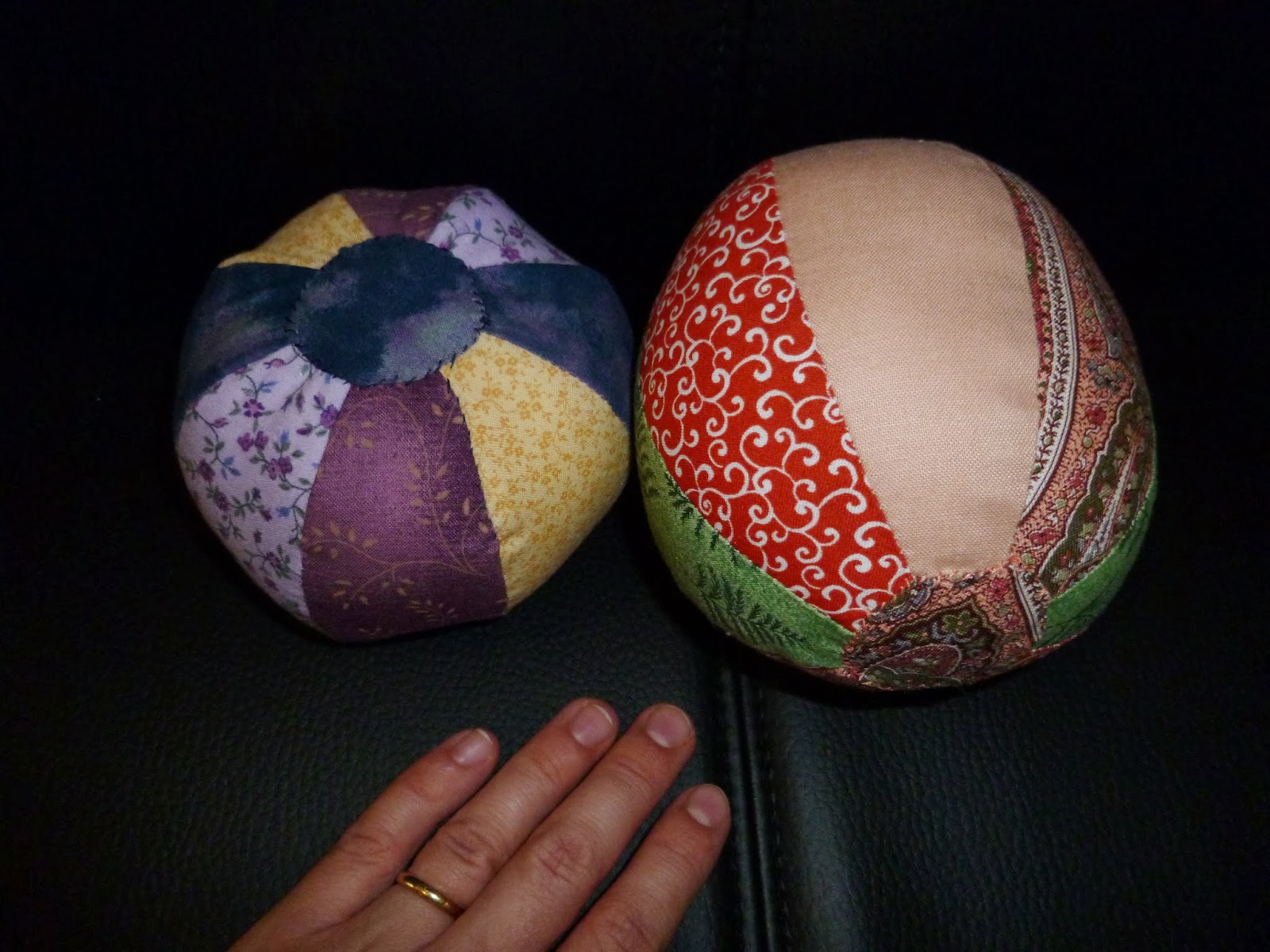
Before getting into the serious stuff, I should show you a picture of the toys I made for baby. You can find the pattern HERE.


(My hand included for scale)


I followed the directions and was surprised to see that my first effort was shaped more like a football than a beach ball. I tried again and cut the pieces into shorter shapes, which resulted in a sort of squished pastry. It’s still cute, though, and baby can throw it without breaking the windows.


2.
***


I mentioned my happy relationship with chocolate in a previous post. However, I have new evidence support it. Read this ARTICLE about the benefits of chocolate as observed by a fantastic Finnish study (the Finns make good chocolate, so they know what they are talking about). 


Focus on the cheerful Finnish part, which says,

“The scientists found that women who regularly ate chocolate while they were pregnant were more likely to say their babies smiled and laughed a lot. They were also more likely to say they were active…. Stressed women who ate chocolate were more likely to say their babies were less fearful in new situations. Stressed women who didn't eat chocolate said their babies were quite fearful in new situations.”

NOT on the gloomy British expert who counters,

"Chocolate is very high in calories and eating too much could lead to unsatisfactory weight gain. I wouldn't advocate supplementing the diet during pregnancy with chocolate."

Bleh. Well, the same to you, Mr. Nigel-Nochocolate.


Related Posts Plugin for WordPress, Blogger...